- Contact Us Now: (315) 234-4935 Tap Here To Call Us




Understanding the Hague Convention in International Child Custody Cases


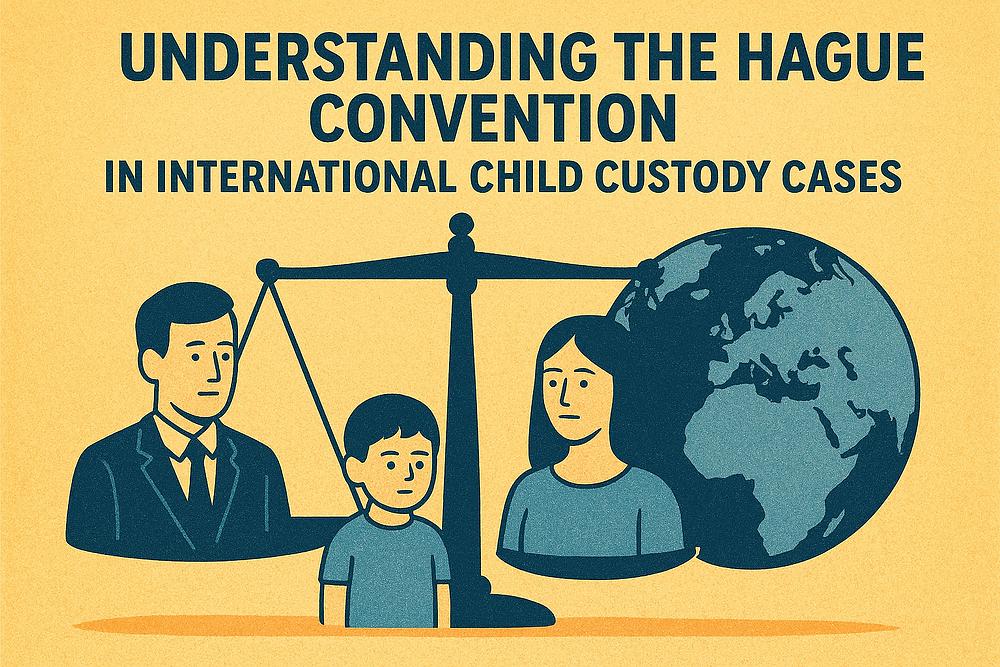
When parents separate and one parent takes a child across international borders without permission, the situation can become a parent’s worst nightmare. The Hague Convention on the Civil Aspects of International Child Abduction provides a legal framework to address these heartbreaking situations and understanding how it works is essential for any parent involved in an international custody dispute. In this post, a Syracuse child custody attorney explains what you need to know.
What Is the Hague Convention?
The Hague Convention is an international treaty designed to protect children from the harmful effects of international abduction by a parent. Adopted in 1980 and ratified by the United States in 1988, the Convention now has over 100 member countries. Its primary purpose is to ensure the prompt return of children who have been wrongfully removed from or retained outside their country of habitual residence.
The Convention operates on a fundamental principle: custody disputes should be resolved in the child’s home country by the courts most familiar with the child’s circumstances, not by the parent who chooses to relocate without permission.
When Does the Hague Convention Apply?
For the Hague Convention to apply to your case, several conditions must be met. First, both the country where the child habitually resided and the country where the child is now located must be signatories to the Convention. Second, the child must be under 16 years of age. Third, the removal or retention must be considered “wrongful” under the Convention’s terms.
A removal or retention is considered wrongful when it violates custody rights under the law of the child’s habitual residence. This means that if you have custody rights, whether through a court order, by operation of law, or even through joint custody arrangements, and the other parent takes your child to another country without your consent, this may constitute a wrongful removal under the Hague Convention.
The Return Process
When a child has been wrongfully removed to another country, the left-behind parent can file an application for the child’s return. In the United States, applications are submitted through the U.S. Department of State’s Office of Children’s Issues, which works with the Central Authority in the country where the child is located.
The receiving country’s courts must act expeditiously, typically within six weeks, to determine whether the child should be returned. Importantly, these proceedings are not custody hearings. The court does not decide who should have custody of the child, but rather whether the child should be returned to their country of habitual residence so that custody matters can be properly adjudicated there.
Defenses to Return
The Convention does recognize limited circumstances where return may be denied. The taking parent can argue that more than one year has passed since the removal and the child is now settled in the new environment, that there is a grave risk that return would expose the child to physical or psychological harm, that the child objects to being returned (if the child is mature enough), or that return would violate fundamental human rights principles of the requested country.
These defenses are intentionally narrow. Courts interpret them strictly because the Convention’s primary goal is to deter international child abduction by ensuring that such actions do not result in a favorable custody outcome for the abducting parent.
New York’s Role in Hague Convention Cases
As a major international hub, New York frequently sees Hague Convention cases. The U.S. District Courts for the Southern and Eastern Districts of New York have jurisdiction over these matters when children are brought to or retained in New York. New York family courts also encounter these cases when determining whether to enforce custody orders from other countries or when addressing related custody matters.
If you’re facing a potential international child abduction situation, time is critical. The sooner you act, the better your chances of securing your child’s prompt return.
Prevention and Planning
For parents with international connections, whether through marriage to a foreign national, dual citizenship, or family abroad, prevention is key. If you’re concerned about the possibility of international child abduction, there are steps you can take. These include obtaining clear custody orders, requesting that the other parent’s passport be flagged with the U.S. State Department’s Children’s Passport Issuance Alert Program, keeping your child’s passport secure, and ensuring custody orders specifically address international travel and restrictions.
Contact A Syracuse Child Custody Attorney Today
Hague Convention cases are complex and time-sensitive. They require knowledge of both international treaty law and the specific procedures of multiple countries’ legal systems. If your child has been taken abroad without your permission, or if you’re facing allegations that you’ve wrongfully removed your child, you need experienced legal counsel immediately. Contact us today for a free confidential consultation for consultation with an experienced Syracuse child custody attorney.
For more information on child custody proceedings, please visit our Child Custody and Frequently Asked Questions pages
Disclaimer: This blog post is for informational purposes only and does not constitute legal advice. Laws and guidelines can change, so always verify with current statutes or a professional.

Address
| Monday | 8:30 AM - 4:30 PM |
| Tuesday | 8:30 AM - 4:30 PM |
| Wednesday | 8:30 AM - 4:30 PM |
| Thursday | 8:30 AM - 4:30 PM |
| Friday | 8:30 AM - 4:30 PM |
| Saturday | Closed |
| Sunday | Closed |
Contact Us Now