- Contact Us Now: (315) 234-4935 Tap Here To Call Us




Inheritance and Divorce in New York: Is It Protected or Subject to Distribution?


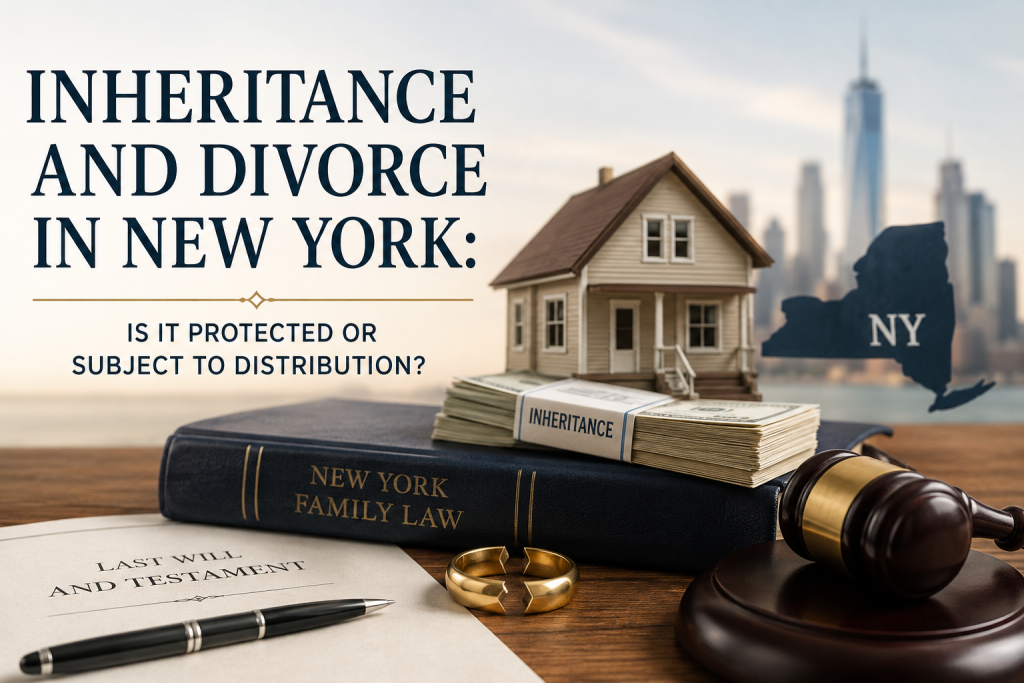
When people think about divorce in New York, one of the most common questions is: “What happens to an inheritance?” The short answer is that inheritances are usually considered separate property under New York law. But there are important exceptions. In some situations, inherited money or property can lose its protected status and become partially, or even fully, subject to equitable distribution in a divorce. In this post, a Syracuse divorce attorney explains what New York spouses need to know about how inheritance is treated during divorce proceedings.
Separate Property vs. Marital Property in New York
Under New York Domestic Relations Law, property acquired during the marriage is generally considered marital property, meaning it may be divided between spouses during divorce. However, certain categories of property are classified as separate property, including:
- Property owned before the marriage
- Gifts from third parties
- Personal injury awards (with some exceptions)
- Inheritances received by one spouse
That means if one spouse receives money, real estate, investments, or other assets through inheritance, those assets are typically not divided in the divorce. But the analysis does not stop there.
When an Inheritance Stays Protected
An inheritance is most likely to remain separate property when the receiving spouse keeps it clearly separate from marital finances. Examples include:
- Depositing inherited funds into an account held only in that spouse’s name
- Keeping inherited investment accounts separate
- Maintaining inherited real estate solely in the inheriting spouse’s name
- Avoiding the use of inherited funds for joint marital expenses
If the inheritance remains traceable and distinct, courts are generally more willing to recognize it as separate property.
How Inherited Assets Can Become Marital Property
One of the biggest mistakes people make is assuming inherited property is automatically protected no matter what they do with it. In New York, separate property can become marital property through a process commonly referred to as commingling or transmutation.
Common Examples of Commingling
Depositing Inheritance Into a Joint Account
If inherited funds are placed into a joint bank account used by both spouses, it may become difficult to prove which funds were inherited and which were marital. Over time, courts may determine that the inheritance lost its separate character.
Using Inheritance for Marital Purposes
Inherited money used to:
- Renovate the marital residence
- Pay joint debts
- Fund family living expenses
- Purchase jointly titled property
may create arguments that the inheritance was intended to benefit the marriage.
Retitling Inherited Property
Suppose one spouse inherits a house from a parent and later adds the other spouse to the deed. That transfer may be viewed as a gift to the marriage, potentially converting some or all of the property into marital property.
What About Appreciation of an Inherited Asset?
This is where many inheritance disputes become more complicated.
Passive Appreciation
If an inherited asset increases in value solely due to market forces, such as stock growth or rising real estate values,that appreciation often remains separate property. Example:
- A spouse inherits stock worth $100,000
- The stock grows to $160,000 due to market conditions alone
The increase may remain separate.
Active Appreciation
If the non-owning spouse contributed directly or indirectly to the growth of the inherited asset, the appreciation may be considered marital property. Examples include:
- Helping manage inherited rental property
- Working in a family business received through inheritance
- Contributing labor or marital funds toward improving inherited property
In these cases, the increase in value, not necessarily the original inheritance itself, could become subject to equitable distribution.
Inherited Real Estate and the Marital Home
Inherited real estate frequently becomes a major issue in New York divorces.
Consider these examples:
Scenario 1: Protected Inheritance
A wife inherits a lake house from her parents and keeps it solely in her name. The couple occasionally vacations there, but marital funds are not used to maintain it. The property may remain separate.
Scenario 2: Potentially Marital
A husband inherits a home, retitles it jointly, and the couple spends years using marital income to renovate and maintain it. A court may determine that some or all of the property became marital.
Can a Spouse Claim Part of an Inheritance Indirectly?
Even if an inheritance itself remains separate property, it can still affect other aspects of the divorce. For example:
- Income generated by inherited assets may factor into support calculations
- A spouse’s financial resources can influence maintenance determinations
- Commingled inherited funds may complicate asset tracing
High-asset divorces often involve forensic accounting to determine whether inherited property remained separate or became intertwined with marital finances.
How New York Courts Analyze Inheritance Issues
New York courts often focus on:
- Intent
- Titling
- Tracing of funds
- Use of marital assets
- Contributions from the non-owning spouse
Because inheritance disputes are highly fact-specific, documentation matters tremendously.
Important records may include:
- Bank statements
- Deeds
- Estate records
- Investment account histories
- Financial transfers between accounts
The ability to clearly trace inherited assets can make the difference between protection and distribution.
How to Better Protect an Inheritance During Marriage
While every situation is unique, spouses who wish to preserve inherited property as separate often:
- Keep inherited assets in separate accounts
- Avoid mixing inherited funds with joint money
- Maintain clear financial records
- Avoid retitling inherited property jointly
- Consider prenuptial or postnuptial agreements
Taking these steps early can help reduce costly litigation later.
Contact a Syracuse Divorce Attorney Today
In New York, inheritances are generally considered separate property and are often protected during divorce. However, that protection is not automatic or absolute. Once inherited assets become mixed with marital finances, jointly titled, or used extensively for the marriage, disputes can arise over whether some portion should be equitably distributed. Because inheritance issues can involve substantial financial stakes and complex tracing questions, it is important to obtain legal advice tailored to the specific facts of your case. A knowledgeable New York family law attorney can help evaluate whether inherited assets are likely to remain separate property or whether they may be vulnerable to distribution during divorce proceedings. Contact our office today for a confidential consultation with an experienced Syracuse divorce attorney.
For more details on the divorce process please visit our Divorce and Frequently Asked Questions pages.
Disclaimer: This blog post is for informational purposes only and does not constitute legal advice. Laws and guidelines can change, so always verify with current statutes or a professional.

Address
| Monday | 8:30 AM - 4:30 PM |
| Tuesday | 8:30 AM - 4:30 PM |
| Wednesday | 8:30 AM - 4:30 PM |
| Thursday | 8:30 AM - 4:30 PM |
| Friday | 8:30 AM - 4:30 PM |
| Saturday | Closed |
| Sunday | Closed |
Contact Us Now