- Contact Us Now: (315) 234-4935 Tap Here To Call Us




How Does Evidence Work in New York State Divorces?


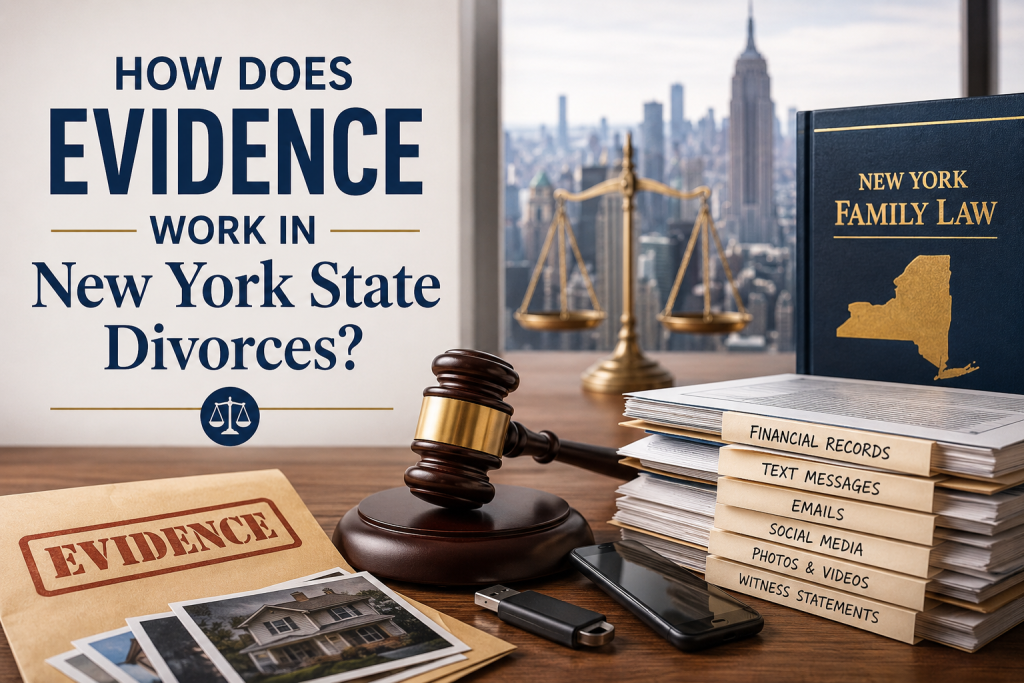
Divorce cases in New York are often won or lost based on evidence. Whether the dispute involves child custody, finances, hidden assets, domestic violence allegations, or claims of marital misconduct, the court’s decisions are supposed to be based on admissible proof, not speculation, assumptions, or emotional accusations. Understanding how evidence works in a New York divorce can help you avoid costly mistakes and better prepare your case from the beginning. In this post, a Syracuse divorce attorney explains what you need to know.
What Counts as Evidence in a New York Divorce?
In a divorce case, “evidence” generally refers to any information used to prove or disprove a fact that matters to the court. Evidence can take many forms, including:
Financial Evidence
Financial documentation is central in nearly every divorce. Common examples include:
- Tax returns
- Pay stubs
- Credit card statements
- Retirement account records
- Mortgage documents
- Business accounting records
- Venmo, PayPal, or cryptocurrency transaction histories
These records may be used to determine:
- Income for support purposes
- Marital versus separate property
- Asset dissipation
- Hidden income or concealed assets
In high-conflict cases, forensic accountants may also testify as expert witnesses.
Text Messages, Emails, and Social Media
Digital evidence has become increasingly important in modern divorce litigation. Courts frequently see:
- Threatening text messages
- Admissions about finances
- Communications involving children
- Social media posts contradicting claims made in court
However, digital evidence still must be authenticated. A party generally needs to establish that the message actually came from the other person and was not altered. Even deleted material may sometimes be recoverable through discovery or subpoenas.
Not all evidence is automatically admissible simply because it exists. New York follows formal rules of evidence that determine what a judge may consider.
Hearsay Problems in Divorce Cases
“Hearsay” is one of the most misunderstood evidence rules. In simple terms, hearsay usually means an out-of-court statement offered to prove the truth of the statement itself. For example: “My friend told me my spouse is hiding money.” That statement may be excluded because the friend is not testifying directly in court. There are many exceptions to the hearsay rule, but hearsay objections arise frequently in divorce and custody litigation.
Evidence in Child Custody Disputes
Custody litigation often involves a broader range of evidence than purely financial divorce issues. Judges may consider:
- School records
- Medical records
- Mental health evidence
- Testimony from teachers or relatives
- Parenting communications
- Photographs and videos
- Substance abuse evidence
- Prior police involvement
The court’s focus is the “best interests of the child,” and evidence is evaluated through that lens. In some cases, the court may appoint an attorney for the child or order forensic evaluations that become important pieces of evidence.
Discovery: How Parties Obtain Evidence
Before trial, parties engage in “discovery,” which is the formal process of obtaining evidence from the other side. Discovery tools may include:
- Demands for documents
- Interrogatories
- Depositions
- Subpoenas
- Notices to admit
- Expert disclosures
If one spouse refuses to provide information, the court can issue orders compelling disclosure and, in some situations, impose sanctions.
Credibility Matters More Than Many People Realize
Judges in divorce cases routinely evaluate credibility. A party who exaggerates, hides information, manipulates evidence, or gives inconsistent testimony can seriously damage their case, even if some of their underlying claims are legitimate. In many contested divorces, the judge’s assessment of credibility becomes one of the most important factors affecting the outcome.
Contact a Syracuse Divorce Attorney Today
Evidence issues in divorce cases can quickly become complicated, especially when custody disputes, business interests, hidden assets, or allegations of misconduct are involved. If you are considering divorce or are already involved in litigation, obtaining legal advice early can help protect both your rights and your credibility throughout the process. Contact our office today for a confidential consultation with an experienced Syracuse divorce attorney.
For more details on the divorce process please visit our Divorce and Frequently Asked Questions pages.
Disclaimer: This blog post is for informational purposes only and does not constitute legal advice. Laws and guidelines can change, so always verify with current statutes or a professional.

Address
| Monday | 8:30 AM - 4:30 PM |
| Tuesday | 8:30 AM - 4:30 PM |
| Wednesday | 8:30 AM - 4:30 PM |
| Thursday | 8:30 AM - 4:30 PM |
| Friday | 8:30 AM - 4:30 PM |
| Saturday | Closed |
| Sunday | Closed |
Contact Us Now