- Contact Us Now: (315) 234-4935 Tap Here To Call Us




Contested vs. Uncontested Divorce in New York: What’s the Difference and Which Is Right for You?


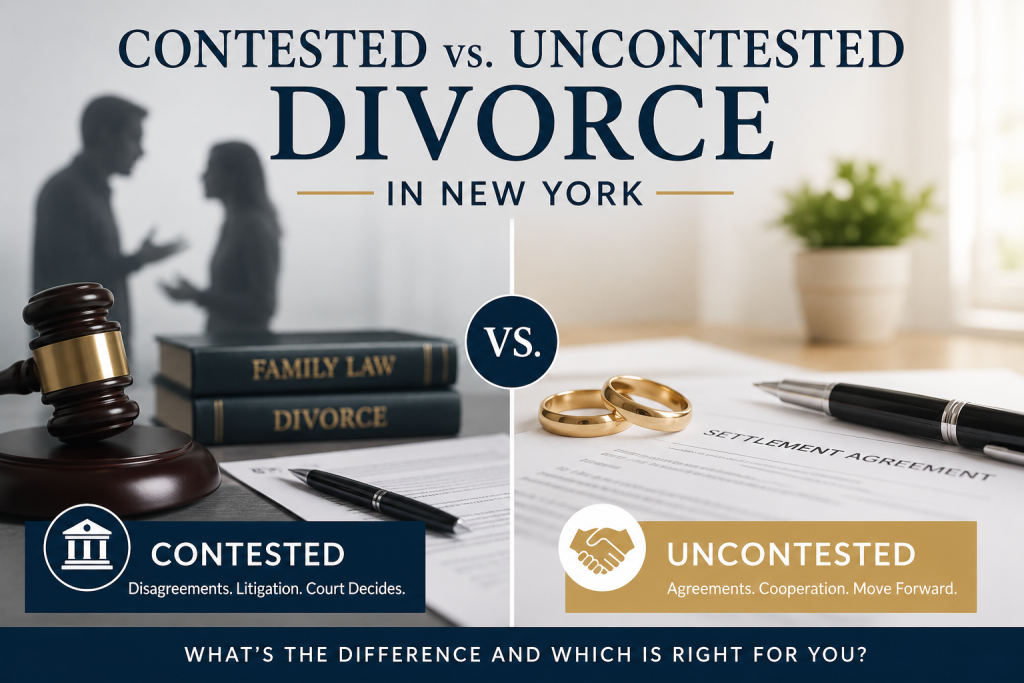
If you are considering divorce in New York, one of the first questions you will face is whether your case will be contested or uncontested. The difference can significantly affect the cost, timeline, stress level, and overall outcome of your divorce. While many people assume divorce always means courtroom battles and lengthy litigation, that is not always the case. In fact, many New York divorces are resolved through agreement rather than trial. Understanding the distinction between contested and uncontested divorce can help you make informed decisions about how to move forward. In this post, a Syracuse divorce attorney explains what you need to know.
What Is an Uncontested Divorce in New York?
An uncontested divorce occurs when both spouses agree on all major issues involved in ending the marriage. This generally includes:
- Division of marital property and debts
- Child custody and parenting schedules
- Child support
- Spousal maintenance (alimony)
- Health insurance and other financial matters
In an uncontested divorce, one spouse still files for divorce, but the other spouse does not dispute the terms. The parties either already have a settlement agreement in place or work together to create one during the process.
Common Reasons Couples Choose an Uncontested Divorce
An uncontested divorce is often appropriate when:
- The marriage was relatively short
- There are limited assets or debts
- The parties communicate reasonably well
- Both spouses want to avoid litigation
- There is a mutual desire to resolve matters quickly and privately
Even couples with children or significant assets can sometimes complete an uncontested divorce if they are able to negotiate workable terms.
Benefits of an Uncontested Divorce
Lower Cost
Because uncontested divorces typically involve less court involvement, fewer attorney appearances, and little to no litigation, they are usually far less expensive than contested cases.
Faster Resolution
An uncontested divorce can often be finalized much more quickly than a contested divorce. While timelines vary by county and court backlog, many uncontested cases resolve in a matter of months rather than years.
More Privacy
Litigation can expose personal financial and family issues in open court proceedings. An uncontested divorce usually keeps more of the process out of the courtroom.
Greater Control Over the Outcome
Instead of having a judge make decisions about your family, the spouses themselves craft the terms of the agreement.
What Is a Contested Divorce?
A contested divorce occurs when the spouses disagree about one or more important issues. That disagreement may involve:
- Whether the divorce should happen at all
- Child custody or parenting time
- Division of assets or retirement accounts
- Spousal maintenance
- Child support calculations
- Allegations of marital misconduct
- Relocation requests
- Valuation of businesses or property
In a contested divorce, the court may need to resolve disputes through motions, conferences, hearings, or ultimately a trial.
What Happens in a Contested Divorce?
Contested divorces in New York are generally much more involved. The process may include:
- Filing and serving divorce papers
- Formal responses and counterclaims
- Financial disclosure and discovery
- Temporary applications for custody, support, or exclusive occupancy
- Settlement negotiations or mediation
- Court conferences
- Trial if no agreement is reached
Some contested divorces eventually settle before trial, while others require a judge to issue final decisions after hearing testimony and reviewing evidence.
Drawbacks of a Contested Divorce
Higher Legal Fees
Litigation is time-intensive. Discovery disputes, court appearances, expert witnesses, and trial preparation can substantially increase costs.
Emotional Stress
Contested divorces often involve ongoing conflict, especially in custody disputes. The emotional toll can be significant for both spouses and children.
Longer Timelines
A contested divorce can take many months or even years depending on the complexity of the issues and the court’s schedule.
Loss of Control
If the parties cannot agree, a judge ultimately decides the disputed issues. The result may satisfy neither side completely.
The Most Commonly Contested Issues in New York Divorce Cases
Child Custody
Custody disputes are often the most emotionally charged part of a divorce. New York courts focus on the “best interests of the child,” considering factors such as parental involvement, stability, communication, and each parent’s ability to meet the child’s needs.
Property Division
New York follows the rule of “equitable distribution,” which does not necessarily mean a 50/50 split. Disagreements often arise over homes, retirement accounts, businesses, and hidden or disputed assets.
Spousal Maintenance
Spousal support disputes frequently center on income differences, earning capacity, duration of the marriage, and future financial needs.
Child Support
While New York uses statutory child support guidelines, disputes may arise over income calculations, add-on expenses, or deviation requests.
Can a Divorce Start Contested and Become Uncontested?
Yes. This happens frequently. Many divorces begin with disagreement but eventually settle through negotiation, mediation, or attorney discussions. In fact, the vast majority of divorce cases resolve before trial. A contested divorce may become uncontested once the parties sign a comprehensive settlement agreement resolving all outstanding issues.
Is an Uncontested Divorce Always Better?
Not necessarily. While uncontested divorces are often less expensive and less stressful, they are not appropriate in every situation. A contested divorce may be necessary when:
- One spouse is hiding assets
- There are serious custody concerns
- Domestic violence or coercion is involved
- One party refuses to negotiate reasonably
- There is a substantial imbalance of financial knowledge or power
In some cases, litigation is the only realistic way to protect a client’s rights or ensure a fair outcome.
How to Decide Which Type of Divorce Is Right for You
The right approach depends on your specific circumstances, including:
- Your ability to communicate with your spouse
- The level of trust between the parties
- The complexity of your finances
- Whether children are involved
- Safety concerns
- Your goals for the process and outcome
Speaking with an experienced New York divorce attorney can help you evaluate your options and determine the most effective strategy for your situation.
Contact a Syracuse Divorce Attorney Today
The difference between a contested and uncontested divorce in New York comes down to one key issue: agreement. If both spouses can reach fair resolutions on all major issues, an uncontested divorce can save time, money, and emotional strain. But when important disputes cannot be resolved voluntarily, a contested divorce may be necessary to protect your interests and your children. Whether your divorce is straightforward or highly contested, having knowledgeable legal guidance can make a significant difference in both the process and the outcome. Contact our office today for a confidential consultation with an experienced Syracuse divorce attorney.
For more details on the divorce process please visit our Divorce and Frequently Asked Questions pages.
Disclaimer: This blog post is for informational purposes only and does not constitute legal advice. Laws and guidelines can change, so always verify with current statutes or a professional.

Address
| Monday | 8:30 AM - 4:30 PM |
| Tuesday | 8:30 AM - 4:30 PM |
| Wednesday | 8:30 AM - 4:30 PM |
| Thursday | 8:30 AM - 4:30 PM |
| Friday | 8:30 AM - 4:30 PM |
| Saturday | Closed |
| Sunday | Closed |
Contact Us Now