- Contact Us Now: (315) 234-4935 Tap Here To Call Us




How Much Do a Child’s Wishes Matter in New York Custody Cases?


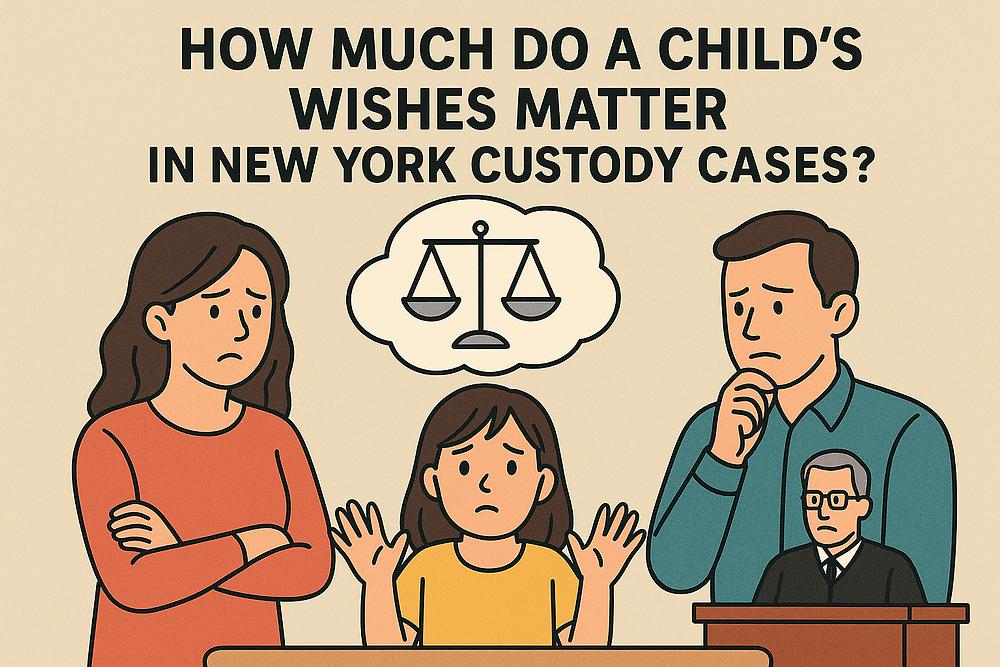
Navigating child custody disputes can be one of the most emotionally challenging aspects of family law. For parents in New York, understanding how the courts approach these decisions is crucial. While the primary focus is always on the “best interests of the child,” many parents wonder about the influence of their child’s own preferences. In this blog post, a Syracuse child custody attorney explores the role that a child’s wishes play in custody determinations under New York law, including when and how they are considered, and why they aren’t always the final word.
The “Best Interests of the Child” Standard
In New York, custody decisions are guided by the principle of what serves the child’s best interests. This standard, outlined in New York Domestic Relations Law § 240, requires judges to evaluate a wide range of factors to determine which custody arrangement, whether sole, joint, or otherwise, will promote the child’s emotional, physical, and psychological well-being. These factors include each parent’s ability to provide stability, the child’s relationship with siblings and extended family, parental mental and physical health, and any history of abuse or neglect.
The child’s wishes are one of these factors, but they are not determinative. Courts recognize that children may have valid insights into their own needs, yet judges must balance these against other evidence to ensure the decision prioritizes long-term welfare over short-term desires.
When Are a Child’s Wishes Considered?
New York courts do take a child’s preferences into account, especially if the child is deemed mature enough to express a reasoned opinion. However, there is no magic age at which a child’s wishes become binding. Instead, the court assesses the child’s age, maturity, and ability to make independent decisions free from parental influence.
For younger children, their preferences may carry little to no weight, as they are often seen as more susceptible to manipulation or unable to fully understand the implications. In contrast, teenagers tend to have their views given more consideration. For instance, a 16-year-old’s preference might influence the outcome more significantly than a 7-year-olds, but even then, it’s weighed against the totality of circumstances.
It’s important to note that while a child’s input is valued, the court will disregard it if it appears coerced or not aligned with their best interests. Case law emphasizes that no single factor, including the child’s wishes, should dominate the decision.
How Does a Child Express Their Wishes?
To protect children from the stress of courtroom battles, New York courts avoid having them testify in open court. Instead, preferences are typically conveyed through less intrusive methods:
- Attorney for the Child (AFC): Formerly known as a law guardian, an AFC is appointed to represent the child’s interests. They interview the child, report their wishes to the court, and advocate based on what they believe is best, even if it differs from the child’s stated preference.
- In-Camera Interviews: The judge may conduct a private interview with the child in chambers. This allows the child to speak freely without parental presence, though the attorney for the child is generally present. This most often occurs following the conclusion of a trial.
These processes help ensure the child’s voice is heard while minimizing trauma.
Limitations and Other Influencing Factors
Even when a child’s wishes are expressed, they must be evaluated in context. Judges scrutinize whether the preference stems from genuine reasoning or external pressures, such as one parent’s influence and a child’s preference can be overridden.
Moreover, enforcing visitation with reluctant older teens against their wishes can be challenging, in not impossible in some instances, and this is often taken into account in these types of situations.
Ultimately, the child’s wishes are just one piece of a larger puzzle. Courts prioritize safety, stability, and healthy parent-child relationships above all.
Contact a Syracuse Child Custody Attorney Today
Child custody determinations in New York are complex and fact-specific, with a child’s wishes playing an informative but not determinative role. As an experienced Syracuse child custody attorney, I can help guide you through every step of the process. Contact us today for a confidential consultation to discuss your unique situation and protect your family’s future.
For more information on child custody proceedings, please visit our Child Custody and Frequently Asked Questions pages
Disclaimer: This blog post is for informational purposes only and does not constitute legal advice. Laws and guidelines can change, so always verify with current statutes or a professional.

Address
| Monday | 8:30 AM - 4:30 PM |
| Tuesday | 8:30 AM - 4:30 PM |
| Wednesday | 8:30 AM - 4:30 PM |
| Thursday | 8:30 AM - 4:30 PM |
| Friday | 8:30 AM - 4:30 PM |
| Saturday | Closed |
| Sunday | Closed |
Contact Us Now