- Contact Us Now: (315) 234-4935 Tap Here To Call Us




Special Considerations in Custody Cases Involving Children with Special Needs


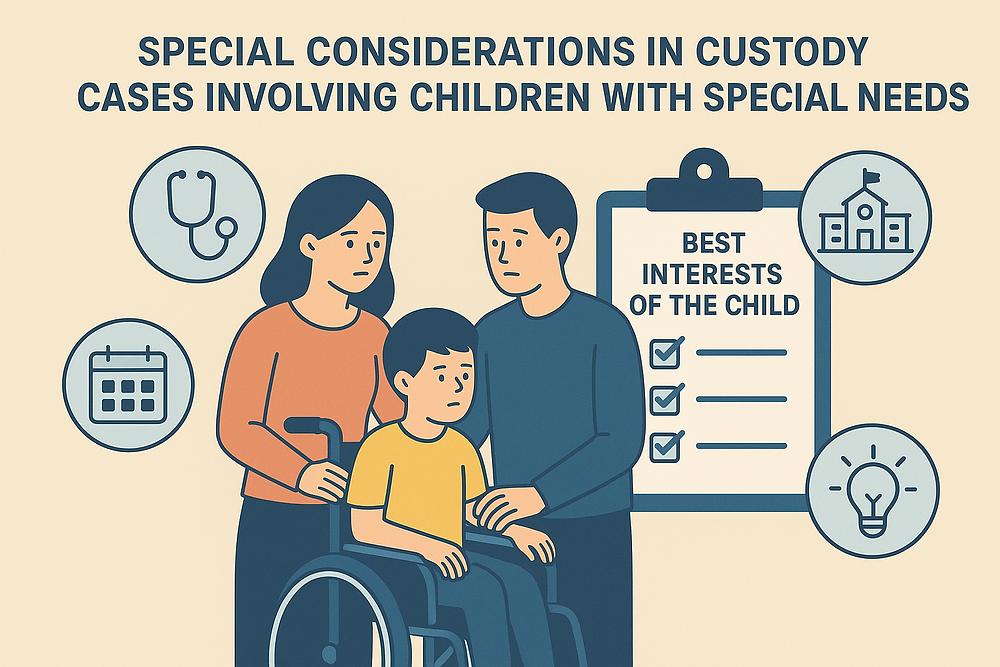
Custody cases are always sensitive, but when a child has special needs, whether physical, developmental, or emotional, courts in New York must take additional factors into account to ensure the child’s best interests are met. As an experienced Syracuse child custody attorney serving clients across Central New York, I know first-hand how these cases often require more detailed parenting plans, specialized medical and educational considerations, and careful evaluation of each parent’s ability to meet the child’s unique needs. This blog post explores key considerations to help parents navigate these complex matters.
Defining Special Needs in Child Custody Contexts
Special needs refer to any condition that requires additional support beyond typical child-rearing. In New York, this includes disabilities that impact daily life, such as mobility issues, communication barriers, or the need for ongoing therapies like speech, occupational, or behavioral interventions.
In New York State family law, cases involving children with special needs require a nuanced approach to ensure the child’s well-being is prioritized. Special needs can encompass a wide range of conditions, including physical disabilities, developmental disorders like autism spectrum disorder (ASD), intellectual disabilities, emotional challenges, or chronic medical issues. These cases often arise in divorce, custody disputes, or support modifications, where standard arrangements may not suffice. Courts focus on the “best interests of the child” standard, but with added emphasis on stability, access to specialized care, and long-term planning.
For example, conditions like ASD often involve sensitivity to routine changes, which can heighten anxiety during parental transitions. Recognizing these needs early in a case allows for tailored legal strategies, ensuring arrangements support the child’s growth and independence.
The “Best Interests of the Child” Standard
New York courts base custody determinations on what serves the best interests of the child. When the child has special needs, this standard expands beyond typical factors like stability and parental involvement. Judges will examine how each parent can accommodate the child’s medical, therapeutic, and educational requirements, and whether each parent has demonstrated a consistent understanding of those needs.
Key Factors the Court Considers
In cases involving children with special needs, the court often looks closely at:
- Access to specialized care: Which parent can ensure the child receives appropriate medical treatment, therapy, or medication management.
- Educational stability: Whether a parent supports the child’s Individualized Education Program (IEP) or special education plan and can maintain continuity with service providers and schools.
- Stability and Routine: Disruptions can be particularly detrimental, so courts favor arrangements that maintain consistent environments, schedules, and caregivers. This often benefits the parent who has historically managed the child’s daily needs
- Flexibility and availability: Parents must often attend multiple appointments and therapies; a parent’s work schedule and support network can be a significant factor.
- Parental fitness and involvement: Courts assess each parent’s understanding of the child’s condition, history of involvement in treatments, and willingness to adapt. Emotional bonds and the child’s preferences (if expressible) are considered, sometimes with input from a guardian ad litem—a neutral advocate appointed to represent the child’s interests.
- Emotional understanding and advocacy: Courts recognize the importance of a parent’s ability to advocate effectively for their child’s services and to manage behavioral or developmental challenges with patience and consistency.
- Financial Capabilities: While not decisive alone, a parent’s resources for therapies, equipment, or home modifications are weighed.
Crafting Tailored Parenting Plans
A comprehensive parenting plan is mandatory in New York custody cases and must be customized for special needs children. These plans outline:
- Visitation schedules that accommodate therapies, medical appointments, and school routines, often with flexible provisions for emergencies.
- Decision-making protocols for education, healthcare, and extracurriculars, promoting collaboration via tools like co-parenting apps.
- Transition strategies to ease changes, such as gradual handoffs or consistent exchange locations.
For children with ASD or similar conditions, plans might limit frequent exchanges to reduce stress. Modifications can be sought as needs evolve, requiring proof of a substantial change in circumstances.
Educational and Medical Decision-Making
Parents must collaborate on Individualized Education Plans (IEPs) and school placements, with courts intervening in disputes. Medical decisions, including treatments or providers, fall under legal custody. Expert witnesses, such as therapists, can clarify needs to the court.
Guardianship and Planning for Adulthood
As children near 18, guardianship may be necessary if they can’t make independent decisions. This grants parents (or others) authority over finances, healthcare, and living arrangements. Divorce agreements should outline these transitions, with alternatives like supported decision-making for higher-functioning individuals
The Role of Experts
Courts may order psychological, medical, or educational evaluations to better understand the child’s specific needs. In some cases, testimony from treating professionals, such as pediatric specialists, therapists, or school counselors, helps the court determine what custody arrangement will best support the child’s well-being.
Contact A Syracuse Child Custody Attorney Today
Navigating family law cases with special needs children in New York demands careful planning to protect their future. By addressing custody, support, and long-term needs thoughtfully, parents can foster stability and growth. If you’re facing such a situation, contact us today for a confidential consultation for consultation with an experienced Syracuse child custody attorney.
For more information on child custody proceedings, please visit our Child Custody and Frequently Asked Questions pages
Disclaimer: This blog post is for informational purposes only and does not constitute legal advice. Laws and guidelines can change, so always verify with current statutes or a professional.

Address
| Monday | 8:30 AM - 4:30 PM |
| Tuesday | 8:30 AM - 4:30 PM |
| Wednesday | 8:30 AM - 4:30 PM |
| Thursday | 8:30 AM - 4:30 PM |
| Friday | 8:30 AM - 4:30 PM |
| Saturday | Closed |
| Sunday | Closed |
Contact Us Now