- Contact Us Now: (315) 234-4935 Tap Here To Call Us




What Are the Consequences of an Order of Protection in New York?


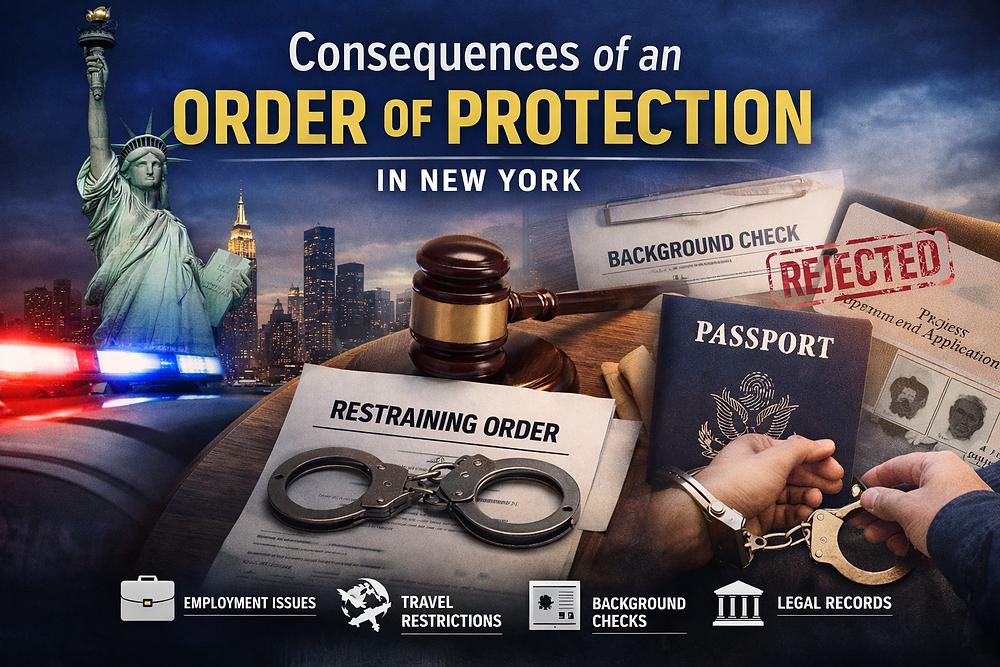
An Order of Protection, sometimes referred to as a restraining order, is not merely a warning. In New York, it is a court order backed by the full enforcement authority of the state. Whether issued in Family Court, Supreme Court (as part of a divorce), or Criminal Court, an Order of Protection can have significant legal, professional, and personal consequences. Understanding those consequences is critical, both for petitioners seeking protection and for respondents defending against the allegations. In this post a Syracuse family law attorney explains what you need to know.
What Is an Order of Protection?
In New York, Orders of Protection are commonly issued by the New York State Unified Court System through:
- Family Court proceedings
- Divorce actions in Supreme Court
- Criminal Court cases
They may be:
- Temporary (ex parte) – issued without the respondent present
- Final (after hearing or consent) – issued after findings or agreement
Orders may include provisions such as:
- No contact (direct or indirect)
- Stay-away requirements (home, workplace, school)
- Surrender of firearms
- Temporary custody determinations
- Exclusive occupancy of the marital residence
Even a temporary order can carry immediate and serious consequences.
Employment Consequences
1. Background Checks
Whether an Order of Protection appears on a background check depends on the type of case:
- Criminal Court Orders of Protection: These are tied to an arrest and will typically appear on criminal background checks.
- Family Court Orders of Protection: These are civil in nature. They do not create a criminal record. However:
- They may appear in court record searches.
- They may be visible in certain government or law enforcement database searches.
- If violated, the resulting criminal charge will appear on a criminal background check.
Employers conducting comprehensive screening—particularly for positions involving children, firearms, security clearance, or professional licensing—may uncover the existence of an order.
2. Professional Licensing
Professionals licensed by state agencies (lawyers, doctors, nurses, teachers, financial advisors, etc.) may face scrutiny. Certain licensing boards require disclosure of:
- Pending criminal matters
- Orders of Protection
- Allegations involving domestic violence
Even absent a conviction, the existence of an order can trigger an investigation.
3. Firearms Restrictions
If an Order of Protection includes a firearm surrender provision, it can affect:
- Law enforcement officers
- Military personnel
- Security professionals
- Anyone whose employment requires firearm possession
Travel Consequences
1. Domestic Travel
An Order of Protection does not automatically prevent domestic travel within the United States. However:
- Stay-away provisions may limit where you can go.
- Violating geographic restrictions, even unintentionally, can result in arrest.
2. International Travel
International travel can be impacted depending on circumstances:
- If the order arises from a criminal case, passport applications or renewals may be affected.
- Some countries may deny entry to individuals with pending criminal charges.
- If a violation warrant is issued, you may be detained upon return to the U.S.
Additionally, if the order involves custody provisions, removing a child from the jurisdiction could result in serious legal consequences.
What Background Checks Will Show an Order of Protection?
The visibility of an Order of Protection depends on the type of case and the database being searched. It is not uniform across all screening platforms.
- Standard Criminal Background Check: An Order of Protection will typically appear if it is connected to a criminal case. Because the order is tied to an arrest or criminal charge, it becomes part of the criminal court record.
- FBI Fingerprint-Based Background Check: If the Order of Protection is associated with a criminal matter, it will likely appear in a fingerprint-based search that accesses federal and state criminal databases.
- Civil Court Record Search: Family Court Orders of Protection are civil in nature and proceedings are generally confidential. However, depending on the scope of the search and the context, related filings or docket entries may be discoverable in certain litigation or investigative settings.
- Professional Licensing Background Check: State licensing agencies often conduct more extensive reviews than private employers. In some cases, applicants may also be required to self-disclose the existence of an Order of Protection, particularly if it involves allegations of domestic violence.
- Employment Screening Through a Private Database: Results vary depending on the vendor and the depth of the search. Some private screening services capture only criminal convictions, while others may report pending cases or publicly available court records.
It is important to understand that while Family Court proceedings in New York are generally confidential, confidentiality does not mean complete invisibility. Court appearances, motions, and related filings may become accessible in certain legal, licensing, or investigative contexts.
What Becomes Public?
1. Criminal Court Cases
Criminal matters are generally public record. If an Order of Protection is issued in connection with a criminal charge:
- The case docket is public.
- Court dates are public.
- The order itself may be referenced in public records.
2. Family Court Proceedings
Family Court matters are not open to the general public in the same way criminal courts are. However:
- Parties and attorneys have full access.
- Certain agencies may access records.
- If related proceedings occur in Supreme Court (divorce), portions of the record may become accessible.
Importantly, even if the file itself is not broadly public, the existence of the proceeding is not always completely shielded from discovery.
Immigration Consequences
Although beyond the scope of many family law cases, non-citizens should be aware that:
- Domestic violence-related findings can have immigration consequences.
- Violations of Orders of Protection can trigger removability issues.
If immigration status is a concern, coordination with immigration counsel is essential.
Violations: The Most Serious Risk
Regardless of how an Order of Protection was issued, temporary or final, violating it is a crime in New York. Violation may result in:
- Arrest
- Criminal charges
- Jail time
- Extension of the order
- Adverse custody findings in Family Court
Even consensual contact (for example, the protected party initiating communication) does not excuse violation. Only the court can modify the order.
Collateral Impact in Custody and Divorce Litigation
In divorce or custody proceedings pending in the Supreme Court of the State of New York, the existence of an Order of Protection can influence:
- Custody determinations
- Parenting time arrangements
- Exclusive occupancy of the home
- Spousal maintenance considerations
Can an Order of Protection Be Modified or Dismissed?
Yes, but only through formal court application. The protected party cannot unilaterally “drop” the order. A motion must be made to the issuing court, and judicial approval is required. Legal strategy matters significantly here—particularly where employment, firearms rights, or professional licensing are at stake.
Contact A Syracuse Family Law Attorney Today
If you have been served with an Order of Protection, or are considering seeking one, consulting experienced counsel immediately is critical to protecting your rights and minimizing unintended consequences. Contact us today for a free confidential consultation with an experienced Syracuse family law attorney.
For more information on family offenses, please visit our Family Offenses in New York State and Frequently Asked Questions pages
Disclaimer: This blog post is for informational purposes only and does not constitute legal advice. Laws and guidelines can change, so always verify with current statutes or a professional.

Address
| Monday | 8:30 AM - 4:30 PM |
| Tuesday | 8:30 AM - 4:30 PM |
| Wednesday | 8:30 AM - 4:30 PM |
| Thursday | 8:30 AM - 4:30 PM |
| Friday | 8:30 AM - 4:30 PM |
| Saturday | Closed |
| Sunday | Closed |
Contact Us Now